



You can also listen to this article.
The Origin of Kyrenia (Girne)
Kyrenia (Girne) has been home to many different civilisations for over two thousand years. However, human habitation in Cyprus as a whole dates back much further. Archaeological evidence shows that people lived on the island at least 10,000 years ago, with artefacts of this age discovered in Akrotiri in the south of Cyprus.
Kyrenia, with its famous harbour, is often known as the “Jewel of the Mediterranean.” Many legends attempt to explain the town’s origins—almost as many as the different peoples who have lived there over the centuries.
One tradition traces Kyrenia’s beginnings to the Achaeans from the Peloponnese in the 10th century BC. According to this account, the town took its name from a mountain in their homeland. Another explanation credits the Phoenicians, who established coastal trading colonies on Cyprus in the mid-9th century BC. A third theory suggests the name derives from the Roman word “Corineum.”
When the well-known traveller Olderburg visited the island in 1211, Kyrenia was recorded under the German name “Schernae,” meaning a small coastal town with walls and towers. Over time, these various influences blended together, giving rise to the names used today: Girne in Turkish and Kyrenia (Keryneia) in English and Greek.
The History of Kyrenia
Kyrenia has been shaped by many different rulers and civilisations over the centuries. These include the Egyptians, Hittites, Phoenicians, Persians, the armies of Alexander the Great, Romans, Byzantines, Richard the Lionheart of England, the Lusignans, Genoese, Venetians, and, more recently, the Ottomans. Remains from all these periods can still be found across Cyprus, making the island a true treasure trove for history lovers.
During the Roman era, Kyrenia came under the rule of the Eastern Roman (Byzantine) Empire. In this period, Orthodox Christianity became firmly established in the region. In 1191, King Richard the Lionheart of England arrived in Cyprus during the Crusades and briefly ruled the island. While there, he married his fiancée Berengaria—who had been shipwrecked on Cyprus—at Limassol Castle. She remains the first and only Queen of England to be crowned in Cyprus.
The impressive Crusader castles of St Hilarion, Buffavento, and Kantara date from this era and still dominate the Kyrenia mountain range today.
Eventually, Richard transferred sovereignty of Cyprus to Guy de Lusignan of France. At that time, Greek was the main language spoken by the population. Under Lusignan rule, Cyprus enjoyed relative stability and prosperity for nearly 300 years. During this period, architecture flourished and Catholic communities became firmly established on the island. Lusignan rule eventually gave way to Venetian control.
The Venetians governed Cyprus from 1489 to 1571. Although their administration was often marked by corruption and inefficiency, they left behind an impressive architectural legacy. This includes the formidable Venetian fortifications of Kyrenia Castle, Famagusta, and Nicosia (Lefkoşa). As the Ottoman Empire expanded, the Venetians anticipated an attack from the north and heavily fortified the capital, Nicosia, with massive circular walls. They also strengthened the defences of Famagusta. Despite these efforts, the Ottoman advance could not be stopped. Nicosia was captured in 1570, and after a long siege, Famagusta fell nearly a year later.
The Ottomans ruled Cyprus from 1571 for more than 300 years, until the island was leased to Britain in 1878. During this period, around 20,000 Turkish settlers arrived, marking the beginning of the widespread use of the Turkish language on the island. A notable example of Ottoman architecture in Kyrenia’s city centre is the Agha Cafer Pasha Mosque, built in 1589–1590.
In 1878, Ottoman Empire and Britain signed an agreement under which Ottomans retained sovereignty over Cyprus, while Britain assumed responsibility for administering the island and protecting it against a possible Russian advance. Britain’s main aim was to secure a strategic outpost in the eastern Mediterranean for military and commercial purposes. Evidence of British rule can still be seen in Kyrenia today, where many colonial-era buildings—such as government offices, law courts, and the post office—were constructed by the British and remain in use.
In 1914, when Turkey and Britain went to war, Britain unilaterally assumed full sovereignty over Cyprus. Formal recognition of this change did not come until the Treaty of Lausanne in 1923. British control was initially welcomed by the majority Greek Cypriot population, who hoped Britain would eventually support their aspiration for union with Greece, known as Enosis. The Turkish Cypriot community, however, viewed this prospect with deep concern.
From the 1950s onwards, tensions escalated as the pro-Enosis organisation EOKA launched attacks against the British administration. These events marked the beginning of a painful period of conflict that ultimately led to widespread unrest and the division of the island. In November 2009, a war memorial dedicated to the 371 British servicemen and womenwho lost their lives in Cyprus during this period was unveiled in the centre of Kyrenia. It remains a poignant and worthwhile site to visit today.
Geography and Nature – Kyrenia Area

Cyprus is the third largest island in the Mediterranean. It lies at the eastern end of the sea, just south of Turkey. With a surface area of around 9,250 square kilometres, it is one of the Mediterranean’s most popular tourist destinations. The town of Kyrenia is located at the centre of Cyprus’s northern coastline.
Rising steeply behind Kyrenia is the Beşparmak mountain range—known in English as the “Five Finger” mountains. The highest point of the range is Selvili Peak, which reaches 1,023 metres above sea level. The northern slopes are covered with dense Aleppo pine forests, while the flatter coastal plains are rich in citrus groves, olive trees, and carob.
There are three main mountain passes, known in Turkish as “Boğaz,” which connect the interior of the island to the Kyrenia coast. The principal route is Girne Boğaz, linking the capital, Nicosia, to Kyrenia. The other two passes are the Mersinlik–Tatlısu road, about half an hour east of Kyrenia, and Geçitköy, approximately half an hour to the west. Beyond the mountains, the coastline offers a varied landscape of sandy beaches and sheltered coves.
Climate
Kyrenia (Girne) enjoys a typical Mediterranean climate, with around 326 days of sunshine each year. Summers are long, hot, and dry, with very little rainfall. Winters are short and mild, although rainfall is more frequent, particularly in January and February, which average around 10 rainy days per month. Snow is rarely seen on the Kyrenia mountain range.
The average lowest temperature in January is about 8°C (46°F), while the warmest average temperature in July reaches around 38°C (100°F). Coastal areas tend to be cooler during the summer months, benefiting from refreshing Mediterranean sea breezes. However, humidity can be relatively high at this time of year.
The average sea temperature is approximately 21°C, and the average humidity level is around 68.8%, contributing to the warm, coastal Mediterranean feel that characterises the region.
Tourist Attractions
Kyrenia Harbour
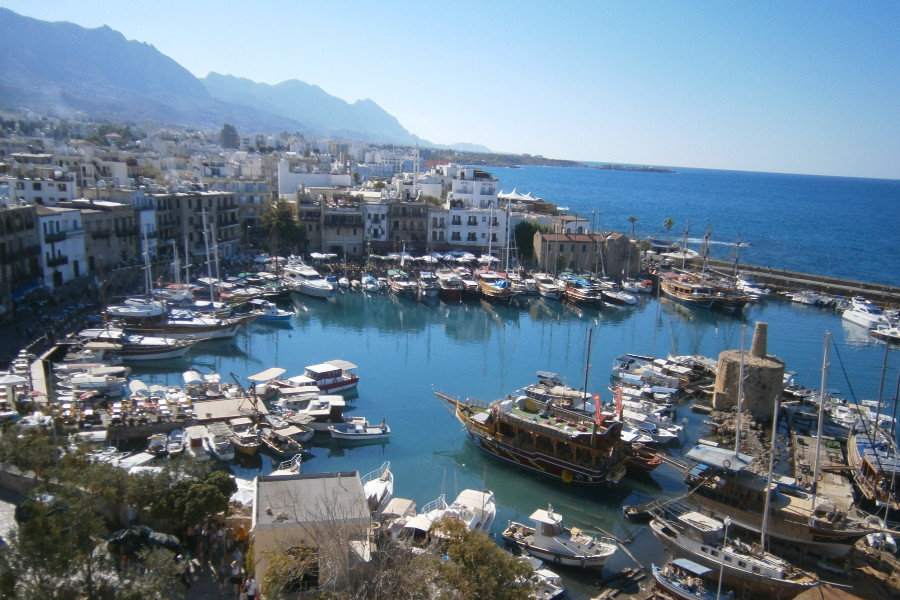
Kyrenia is a magnet for visitors, especially those drawn to its 9,000-year history and its charming historic harbour. The horseshoe-shaped port of Girne is a picturesque scene, filled with a wide variety of seafaring vessels, from luxury yachts and fishing boats to floating cafés.
In the past, the carob bean, once known as “black gold,” was Cyprus’s main export. The stone buildings that line the harbour were originally constructed as warehouses for storing carob products. While carob is still produced today, many of these beautiful buildings have been converted into art galleries, shops, and restaurants, often bearing fitting names such as “Carob Tree.” The harbour itself is edged with dining tables set right beside the water, making it an ideal place for an evening drink or meal while watching the lights shimmer across the sea.
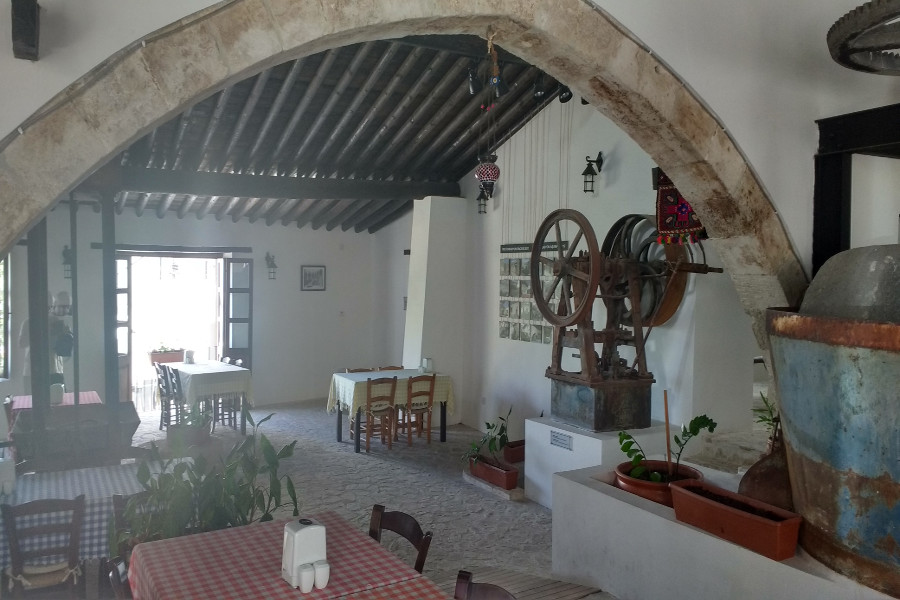
Within Kyrenia’s historic harbour is the Public Arts Museum, housed in a restored 18th-century building. Its exhibits include olive oil presses, traditional agricultural tools, weaving looms, and examples of traditional Cypriot clothing, offering a fascinating glimpse into the island’s rural and cultural heritage.
Kyrenia Castle
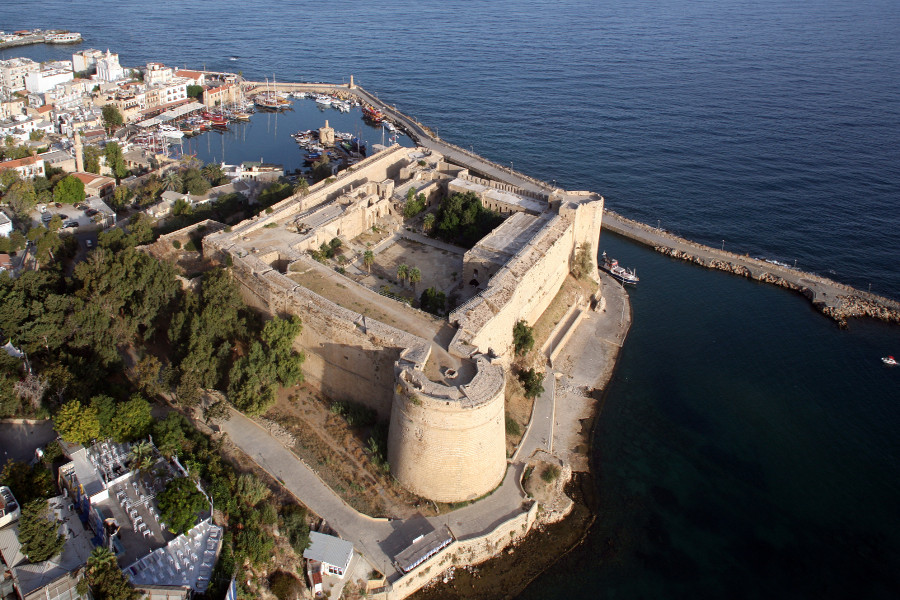
The earliest references to a castle in Kyrenia date back to the Roman period. The original structure was later strengthened by the Byzantines and reinforced again under the Lusignans. However, the most prominent features visible today are the massive fortifications added by the Venetians, who rebuilt the castle’s walls to defend the island against a possible Ottoman invasion.
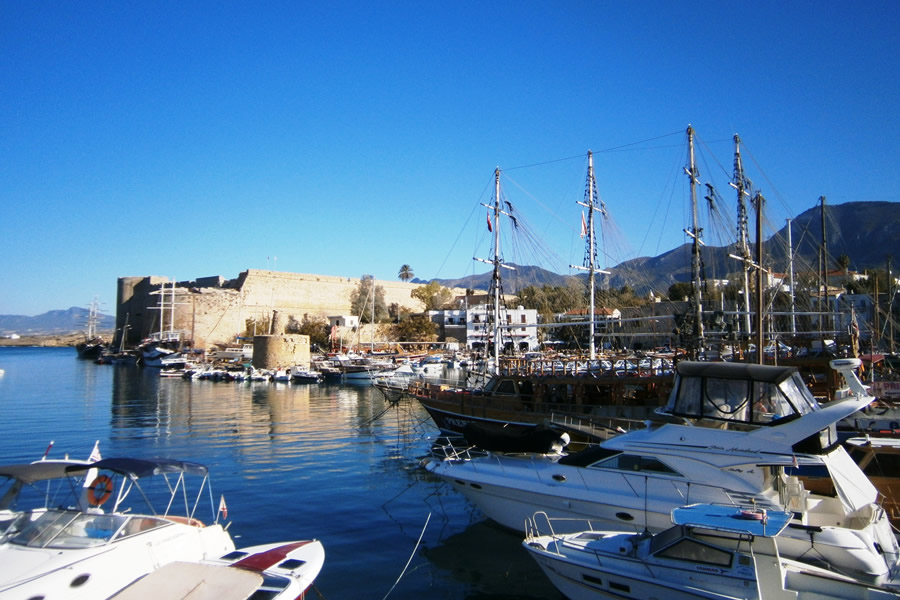
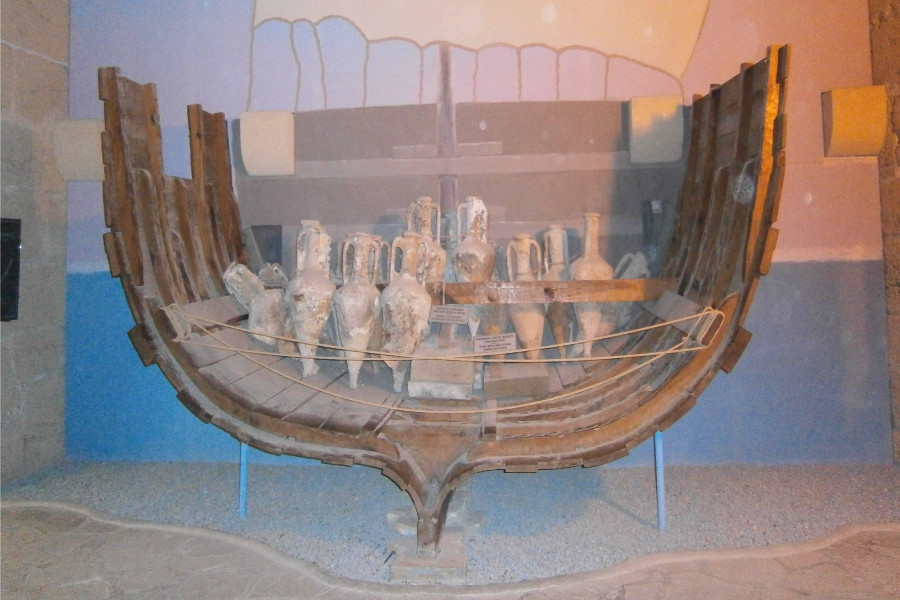
This impressive castle rises above Kyrenia’s harbour and is a must-see for all first-time visitors. Remarkably well preserved and fully open to the public, it offers sweeping views of the harbour alongside rich insights into the island’s history. The castle also houses Northern Cyprus’s Shipwreck Museum, which displays one of the world’s most important and best-preserved maritime discoveries.
In 1965, divers off the coast of North Cyprus discovered what is now recognised as the oldest recorded shipwreck in the world. Dating back to around 300 BC, the vessel was a merchant ship carrying cargo that included amphorae filled with almonds and wine, along with other goods. The wreck was carefully raised and is now preserved in a specially controlled environment within the castle.
Within the castle walls stands the 12th-century Byzantine Church of St George, which has been carefully preserved. When the long-anticipated Ottoman invasion finally took place in 1571, historical evidence suggests that the Venetians abandoned the castle without resistance.
Visitors enter the castle through the north-western gate, following a long ramp that leads to the central parade ground. Along the way lies the tomb of an Ottoman admiral. The main courtyard is surrounded by former guardrooms, living quarters, and stables, with additional ramps leading up to the defensive walls. Stone steps take you to the Lusignan royal apartments and a small chapel. Deep within the castle, the dungeons have been vividly reconstructed with life-sized figures, offering a stark reminder of medieval justice. The climb to the battlements is well worth the effort, rewarding visitors with spectacular views across the harbour and coastline.
The New Harbour
A larger “New Harbour” is located to the east of Kyrenia’s town centre and is also well worth a visit. It serves commercial shipping, as well as car and passenger ferries arriving from Turkey. The harbour also includes Delta Marina, which caters to private yachts and features a pleasant café overlooking the water.

Kyrenia’s economy is largely driven by tourism, with visitors arriving from all over the world. The town is currently experiencing significant growth, with new apartments, hotels, and restaurants appearing at a rapid pace. Despite this modern development, Kyrenia’s old town has retained its traditional charm and character.
University tourism also plays an important role in the local economy. Girne American University, established in 1992, now brings nearly 2,300 students to the town, contributing both economically and culturally to life in Kyrenia.
Events
Each year in May, the International Yacht Race is held near Kyrenia harbour. Around 80 to 90 yachts take part in the event, making it the largest yacht race in the Eastern Mediterranean.
If you want, I can soften the claim slightly or keep it bold, depending on how formal or promotional you want the final piece to be.
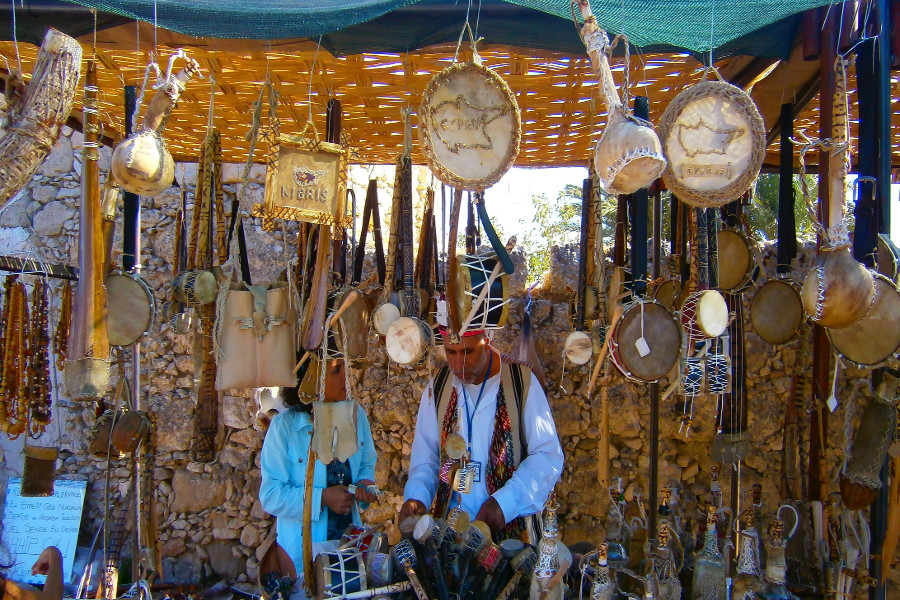
Each year in September, the International Theatre Festival is held, with performances staged in the three major cities of Kyrenia, Lefkoşa, and Famagusta. The festival is organised primarily by the Kyrenia Municipality Theatre Studioand attracts both local and international productions.
In October, the International Olive Festival takes place in Zeytinlik village, to the north-west of Kyrenia. Held annually since 2001, the festival celebrates local culture and traditions. Performances by the Kyrenia folklore group and the Turkish Art Music Ensemble are highlights of the event. Visitors can also enjoy exhibitions of handmade lacework and traditional Cypriot pottery, as well as the popular Olive Food Competition, which showcases regional cuisine.
Bellapais Abbey
History of Bellapais
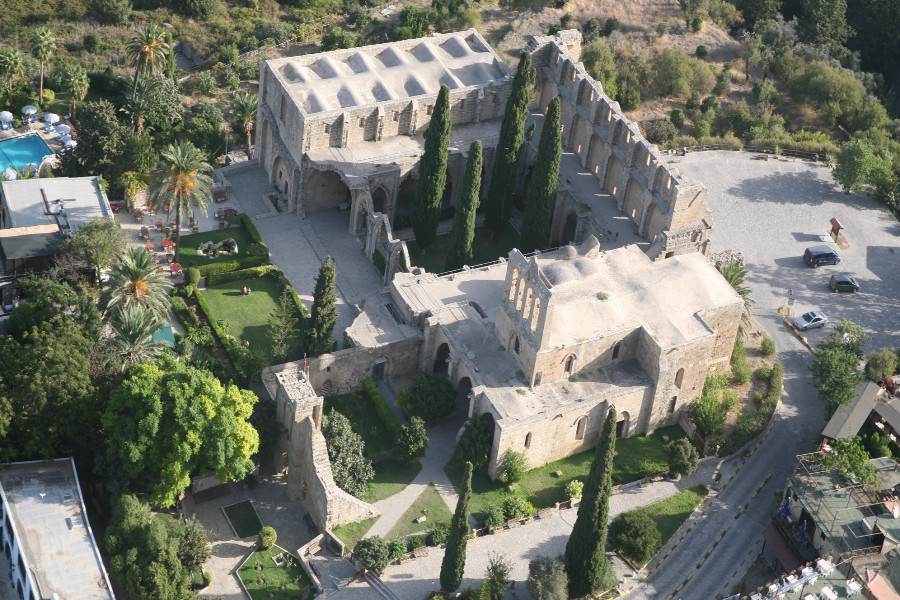
This remarkable abbey takes its present name from the French “Abbaye de la Paix”—the Abbey of Peace. Exceptionally well preserved, it is a fine example of Gothic architecture, dramatically positioned on a rocky mountaintop south of Ozanköy village, on the lower slopes of the Beşparmak (Five Finger) Mountains, south-east of Kyrenia. Set against the steep mountain backdrop, the abbey forms a striking and evocative ruin, offering breathtaking views over Kyrenia and the Mediterranean Sea.
The site of Bellapais may originally have served as a residence for the Bishops of Kyrenia, as well as a place of refuge during the Arab raids of the 7th and 8th centuries.
In 1187, following the capture of Jerusalem by the Saracens, Augustinian canons fled to Cyprus. Around 1200, Aimery de Lusignan founded Bellapais Abbey for them, and it was initially consecrated as the Abbey of St Mary of the Mountain.
From 1206 onwards, the abbey was occupied by the White Canons, also known as the Premonstratensians. Their distinctive white habits gave Bellapais one of its alternative names, the “White Abbey,” a title commonly used during the 15th and 16th centuries. The abbey enjoyed royal patronage, notably from King Hugh III of France, whose tomb is believed to lie within the grounds. Under Lusignan rule, Bellapais grew wealthy and influential, and King Hugh IV is known to have resided there for a time.
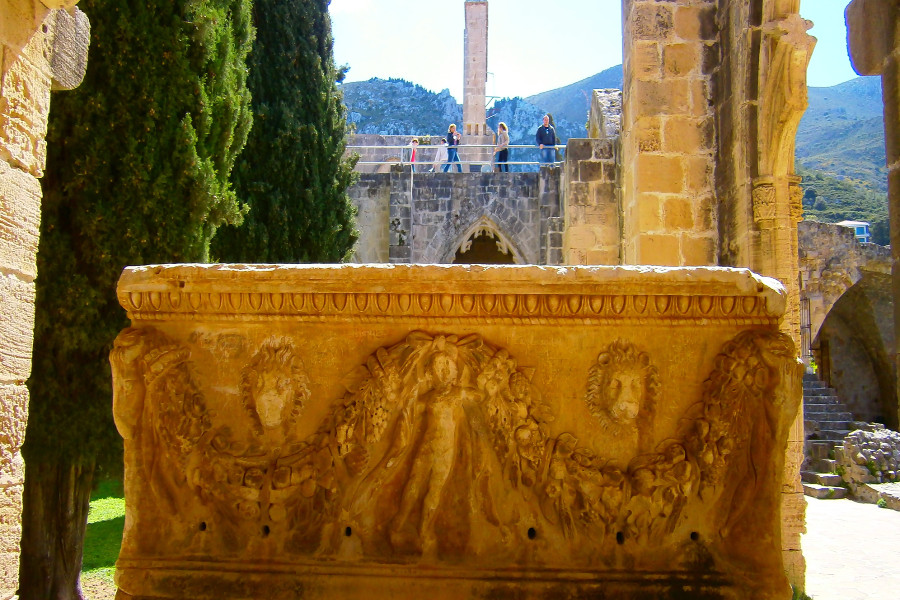
In 1373, the abbey was plundered by marauding Genoese forces, who stripped it of anything light enough to carry away. After this raid, Bellapais entered a period of both physical and moral decline. By the mid-16th century, monastic discipline had largely collapsed. Many of the canons had married—some more than once—and accepted only their own children as novices.
Under Venetian rule, the name Abbaye de la Paix (Abbey of Peace) was shortened to De la Paix, which eventually evolved into the name Bellapais.
Following the Ottoman conquest, Bellapais Abbey was handed over to the Orthodox Church. Although the abbey buildings were largely neglected and fell into disrepair, the abbey church continued to serve as the parish church for the surrounding village, likely inhabited by descendants of the former monks.
Over time, the abbey deteriorated further, with stone from the ruins reused in village houses. In 1878, the British Army cemented the floor of the great hall and converted it into a military hospital. Later, in 1912, the ruins were stabilised and repaired under the supervision of George Jeffery, Curator of the Ancient Monuments of Cyprus.
Bellapais Abbey today
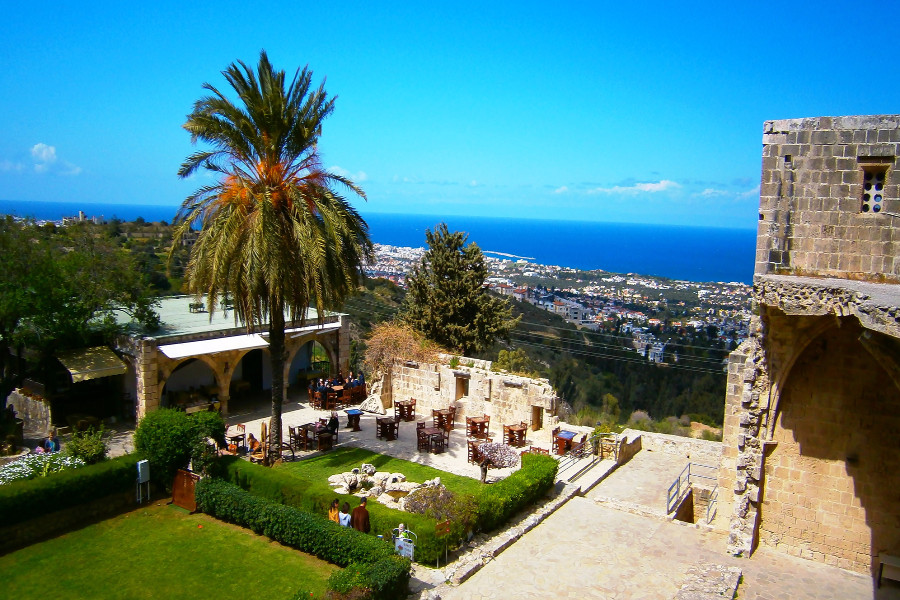
Today, Bellapais Village and Abbey are among the most important tourist attractions in Northern Cyprus. The abbey’s atmosphere and setting give it a special magic, drawing many couples who choose to be married or blessed within its historic grounds. Visitors to North Cyprus are strongly encouraged to spend time wandering through the village itself, with its craft shops and traditional cafés.
One highlight is the famous “Tree of Idleness” café and shop, built beneath the same tree that inspired Lawrence Durrell’s well-known book Bitter Lemons of Cyprus. Nearby, the elegant Bellapais Gardens Hotel is widely regarded as one of the finest dining venues on the island.
Also set within the village grounds is the charming Kybele Restaurant, which offers a historic atmosphere where guests can enjoy classical music while admiring the floodlit abbey and sweeping views of the Mediterranean below. Each year in May and June, the Bellapais International Music Festival takes place in the abbey’s great hall, presenting concerts of the highest standard and standing as one of Northern Cyprus’s most significant cultural events.
North Cyprus International Team

%20–%20A%20Brief%20Guide)